|
|
iSustain Australia offer a wide range of efficient
and reliable PV modules with output ranging from 10W
to 280W. We supply solar panels Australia wide with
free shipping to most regional areas.
Solar power is a great way to reduce
your environmental impact and save money
on your electricity bill. Excess energy gained on a
grid
tie system can be sold back to the home's
electricity retailer, typically for credit. Off grid
solar systems or remote
power systems use deep
cycle batteries to store excess electricity.
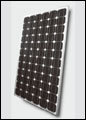
Monocrystalline solar panels
are among the oldest, most efficient, and most dependable
of technologies. Monocrystalline solar cells use very
pure silicon and involve a complicated crystal growth
process. They are made from just one crystal, not multiple
crystals fused together, and the process of making them
is one of the most complex and costly ones around. This
means every panel will cost more. However, that increased
cost is buying additional efficiency, meaning one panel
will produce more power than lower priced options. The
lifespan of a monocrystalline cell is a minimum of twenty-five
years and can be more than fifty, making them a worthwhile
investment for long term use.
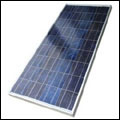
A polycrystalline solar panel is made
from a block of silicon that has multiple crystals. These
panels are square in shape, and may have a surface that
looks somewhat like a mosaic. That’s because of
all the different crystals that make up the module. Because
there are numerous grain boundaries inherent in the design,
the product is cheaper and the efficiency of the polycrystalline
device is not as great as monocrystalline devices. However,
they are much simpler to produce, and cost far less to
manufacture. The durability and longevity of the polycrystalline
and multicrystalline panels are comparable to monocrystalline
modules.
The photovoltaic modules are made
of semi-conducting materials that attract sunlight
while freeing electrons from atoms. As the electrons
flow through the panel, electricity is produced
which is measured in KW per hours. The solar energy
gained from the solar panels can be used to power
your home, business or school.
As time goes by, we begin to see new and more efficient
solar panel designs. This is making the use of photovoltaic
power over fossil fuels much more viable to homeowners
and businesses.
|



 and
and
